



Understanding Craft Chocolate Before Your Tasting
Cacao is the seed of a fruit that grows in tropical climates and needs to be fermented, dried and roasted before being made into chocolate. While chocolatiers work with chocolate to create bars and bonbons, only a few artisans actually make chocolate from the cacao bean. These artisans are known as "chocolate makers" or "craft chocolate makers", and they represent a growing segment of the artisan chocolate market.
Craft chocolate makers usually prioritize ethical sourcing practices, ensuring quality from bean to bar through more direct relationships with cacao farmers. A skilled craft chocolate maker can turn well-fermented, fine-flavor cacao into an amazing chocolate experience. Much like wine, each bar of chocolate will have its own unique flavor and texture based on the approach of the artisan. Below are our suggestions for how to host a chocolate tasting party that celebrates these makers and their craft.
Curating Your Chocolate Tasting Party Selection
Choosing Single Origin Chocolate Bars
Look for chocolate made with high-percent cacao that includes the name of the cacao origin on the wrapper. Purchase chocolates from different makers, making sure to include bars that represent different cacao origins. For dark chocolate, stick with bars that are 64% and higher. You can go as high as 85%, or even 100% (unsweetened) if your group appreciates very dark chocolate.
When selecting bars, look for makers who highlight their direct relationships with cacao farmers and know the origin and ethical practices behind each bar. These makers are more likely to value quality, and they definitely value a shorter supply chain that leaves more money in the hands of the farmer.
If you would like, you may include inclusion bars with added ingredients, milk chocolate and white chocolate. It's up to you!
Selecting Craft Chocolate Makers to Feature
As you choose bars for your chocolate tasting party, consider featuring makers who represent different approaches to their craft. The flavor differences between cacao grown in different countries, and even micro-regions within a country, will offer different flavor profiles. A chocolate from the Manabi region of Ecuador, for example, may have floral and grassy notes while cacao grown in the Cusco region of Peru, may have banana and brown fruit notes. Each chocolate tells a compelling story about how a maker's technique intersects with bean genetics and terroir unique to the growing region. This diversity of approach gives your guests insight into the range of what craft chocolate can be.
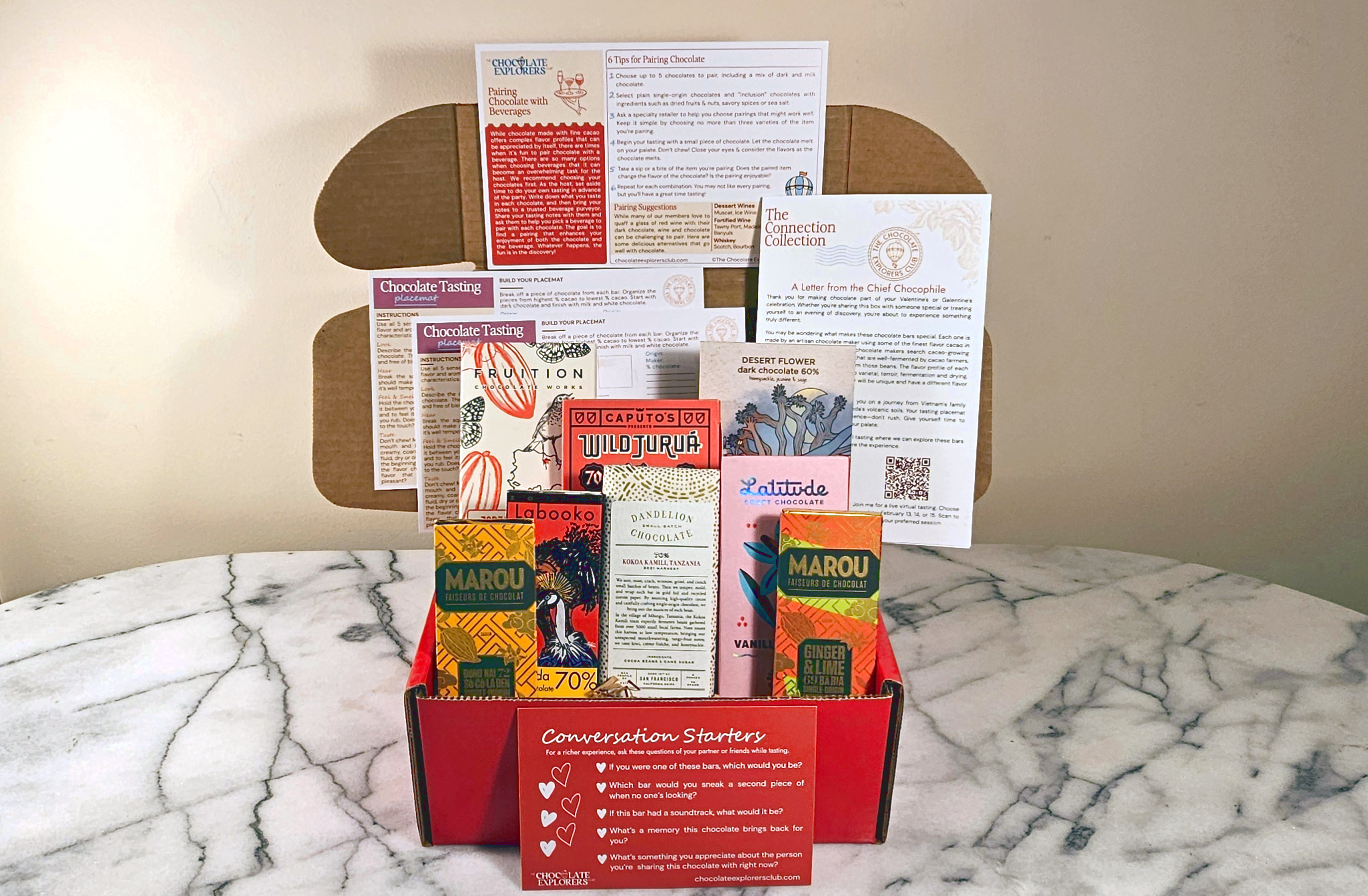
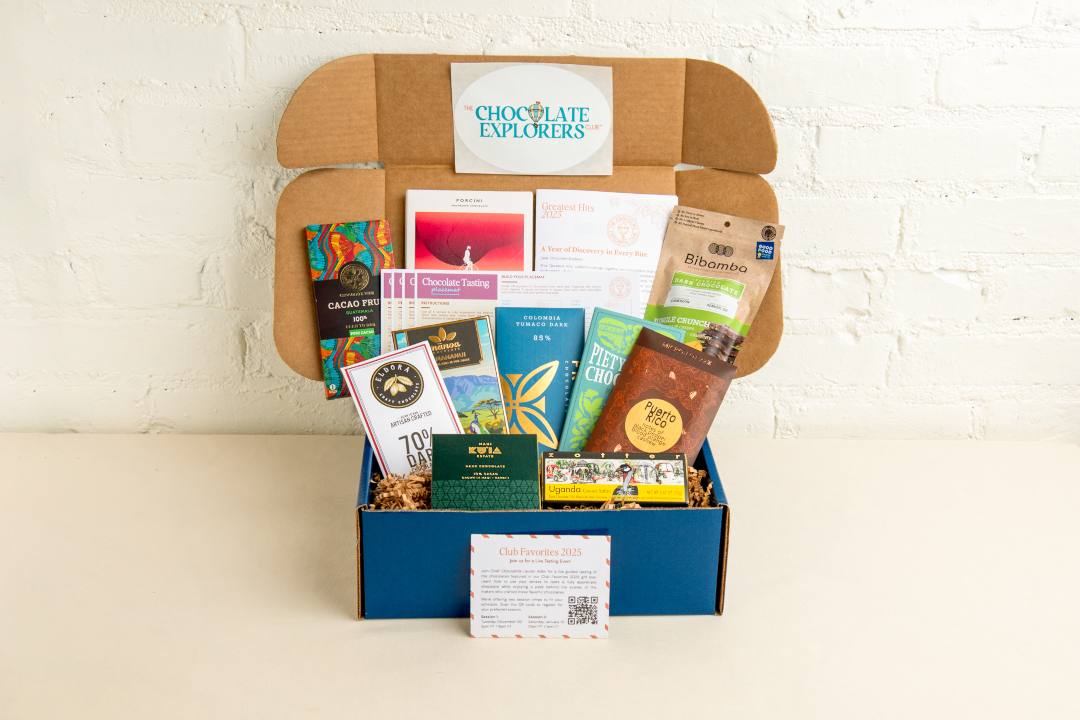
For those seeking a curated selection, our seasonal Club Favorites box features chocolates perfect for your tasting party, taking the guesswork out of choosing while ensuring you have bars that represent noteworthy craftsmanship.
How to Taste Chocolate: A Sensory Guide
The key to a memorable chocolate tasting party is guiding your guests through a sensory journey. Here's how to structure the tasting:
Tasting Order
- Start with plain, dark chocolate.
- Taste from highest % cacao (least sweet) to lowest % cacao (sweetest).
- Inclusion chocolates should be tasted after the plain chocolates. The added ingredients make it more difficult to notice the flavor nuances of single origin chocolate, so it's best to save these until after you've tasted the plain chocolates.
- Save sweeter milk and white chocolate for the end of your tasting.
Setting Up
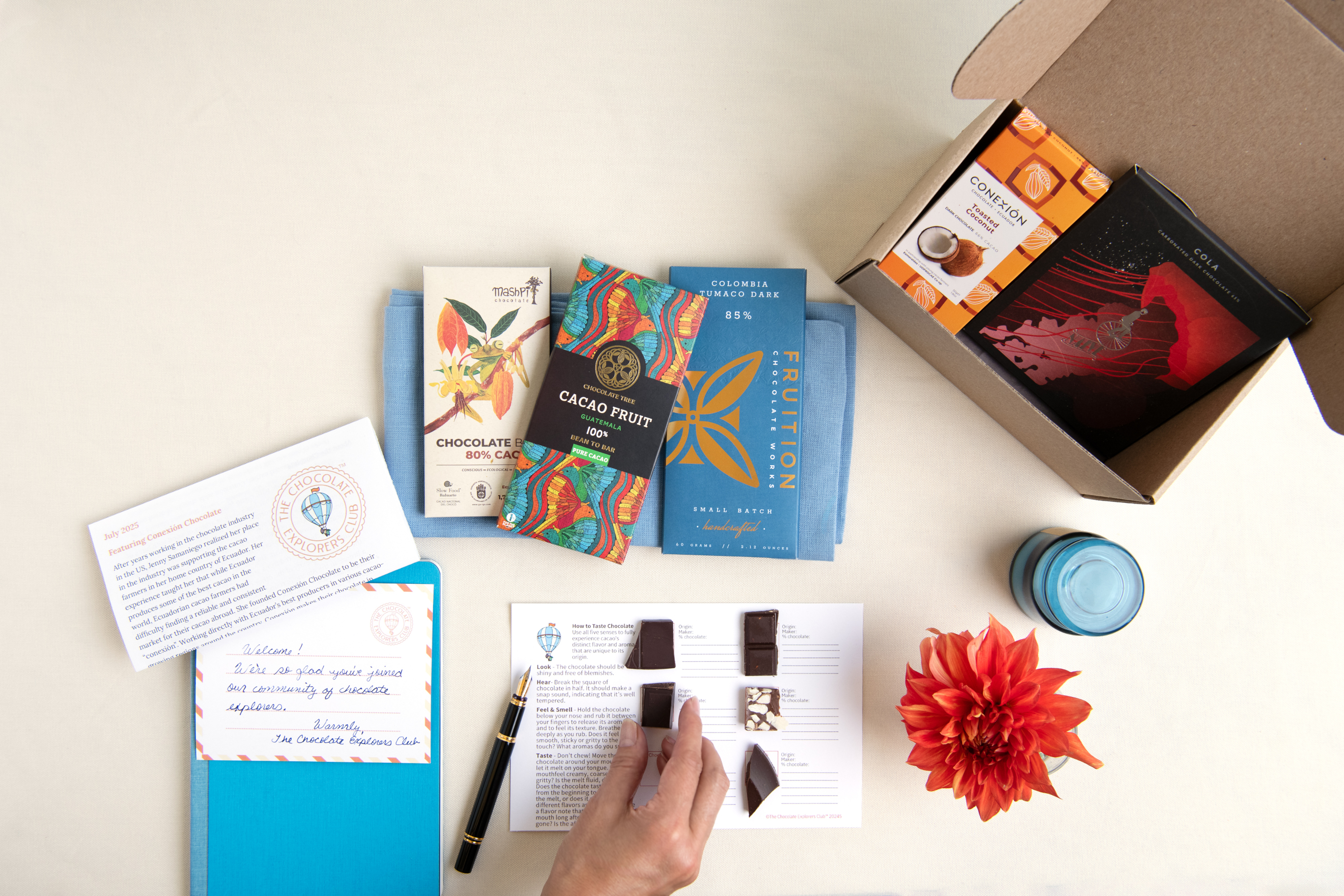
- Head to our website to download a tasting placemat to use for your tasting. You can print one of these out for each guest to use.
- You may prepare squares of chocolate in advance by breaking off a 1" square piece of chocolate for each person and arranging them on plates. If you take this approach, make sure to mark which plate contains which chocolate so you don't forget.
- Alternatively, you may open the chocolate and pass the bar around to each guest so they can break off their own piece. This can be a fun, interactive way to get everyone involved, and it helps everyone to keep track of which chocolate they're tasting.
- Place a piece of chocolate in each of the squares on your tasting placemat, with highest % cacao bars on top and lower % cacao below. Provide your guests with pens so they can write the name of each sample next to the chocolate.
- Follow the instructions on your tasting notecard as you use all five senses to experience the chocolate.
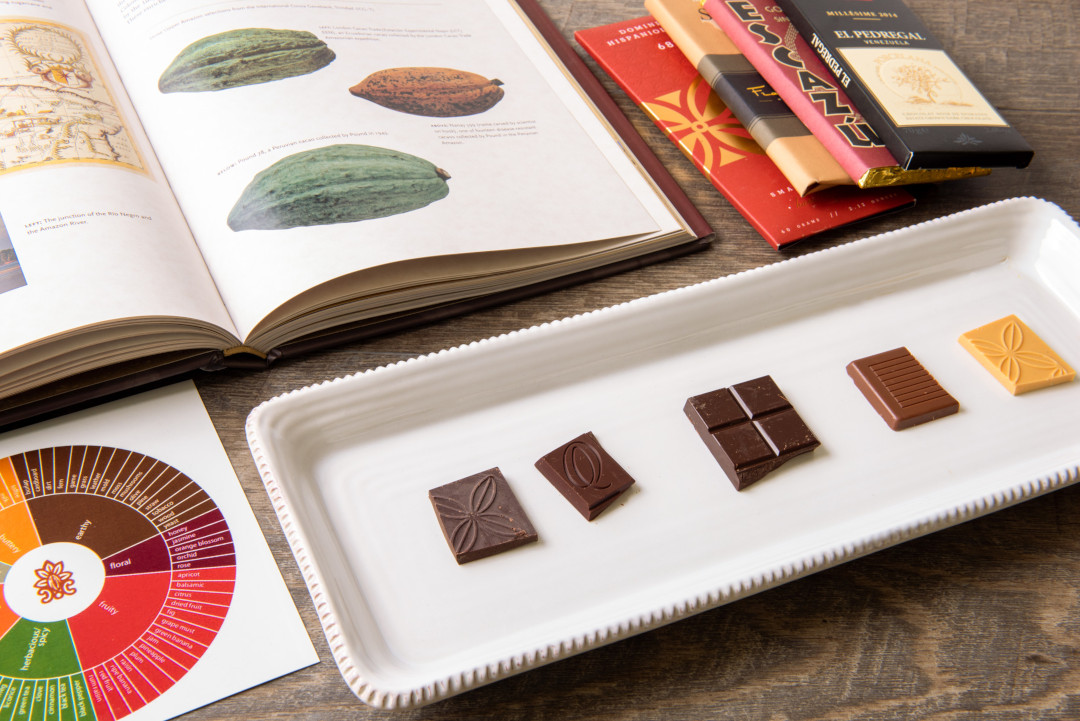
Use All Five Senses to Fully Experience Craft Chocolate
The distinct flavor and aroma in each bar come from the unique characteristics of cacao origin and maker approach. Guide your guests through this sensory exploration:
Look
Describe the color and appearance of the chocolate. The chocolate should be shiny and free of blemishes.
Hear
Break the square of chocolate in half. It should make a snap sound, indicating that it's well tempered.
Smell & Feel
Hold the chocolate below your nose and rub it between your fingers to release its aroma and to feel its texture. Breathe in deeply as you rub. What aromas do you smell? Are they earthy, fruity, smoky or do they remind you of something else? Does it feel smooth, sticky or gritty to the touch?
Taste
Don't chew! Move the chocolate around your mouth and let it melt on your tongue. Is the mouthfeel creamy, coarse, sandy or gritty? Is the melt fluid, dry or oily? Does the chocolate taste the same from the beginning to the end of the melt, or does it offer many different flavors as it melts? Is there a flavor note that lingers in your mouth long after the chocolate is gone? Is the aftertaste pleasant?
Creating the Perfect Tasting Experience
Spark Meaningful Conversations
Instead of asking "Do you like it?" try open-ended questions that invite genuine discovery: "What does this chocolate remind you of?" or "How does the flavor change as it melts?" These questions allow each person's palate to guide the conversation naturally.
As you guide your guests through the tasting, share the makers' stories to provide compelling context that deepens guests' appreciation for the chocolate. Many of these stories are written on the outside, and even on the inside, of the chocolate wrappers. Pass them around and ask different people to share something from each wrapper. Understanding the stories behind the bars makes the experience more enjoyable.
Palate Cleansers Between Chocolates
In order to keep your taste buds fresh, offer your guests palate cleansers between each chocolate. I recommend a pitcher of lukewarm water and glasses so there's plenty of water during the tasting. Why lukewarm water? The cocoa butter in the chocolate will stick to your tongue if you drink cold water. It's easier to clear out the fat from the cocoa butter with lukewarm water. You may also want to provide guests with plain crackers or bread to help clear out any lingering flavors in between each taste of chocolate.
To deepen your appreciation before hosting, join our club and attend our monthly Meet the Maker virtual tastings to learn directly from craft chocolate makers.